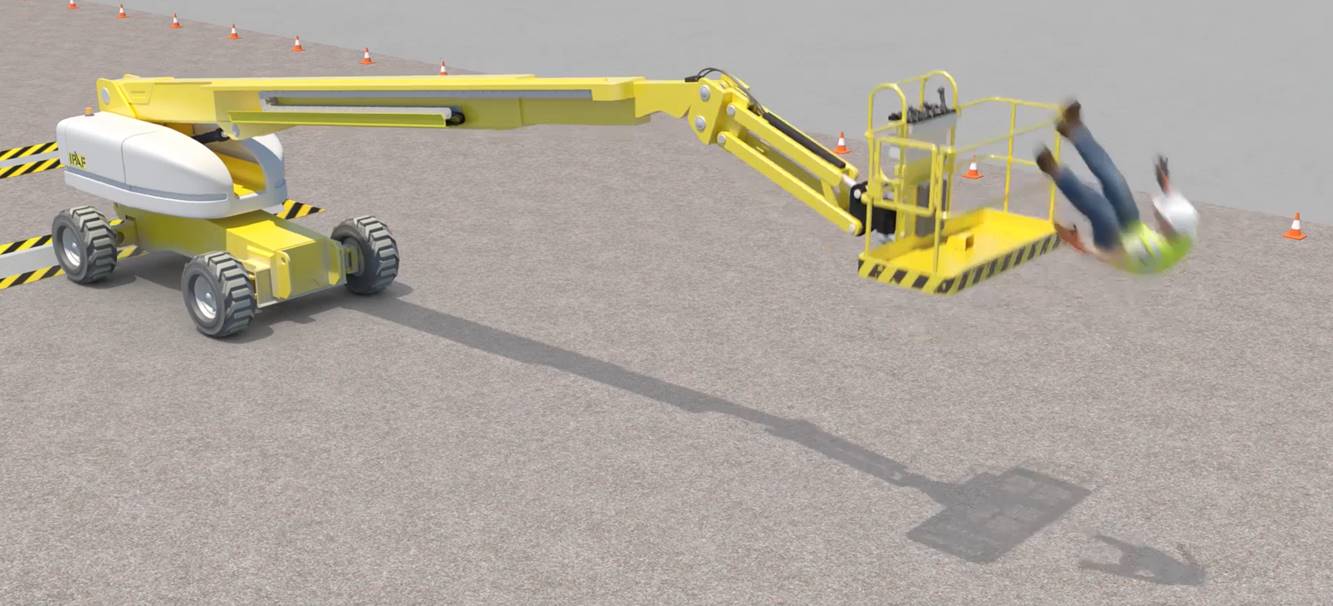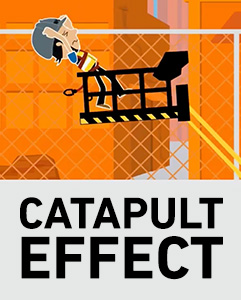

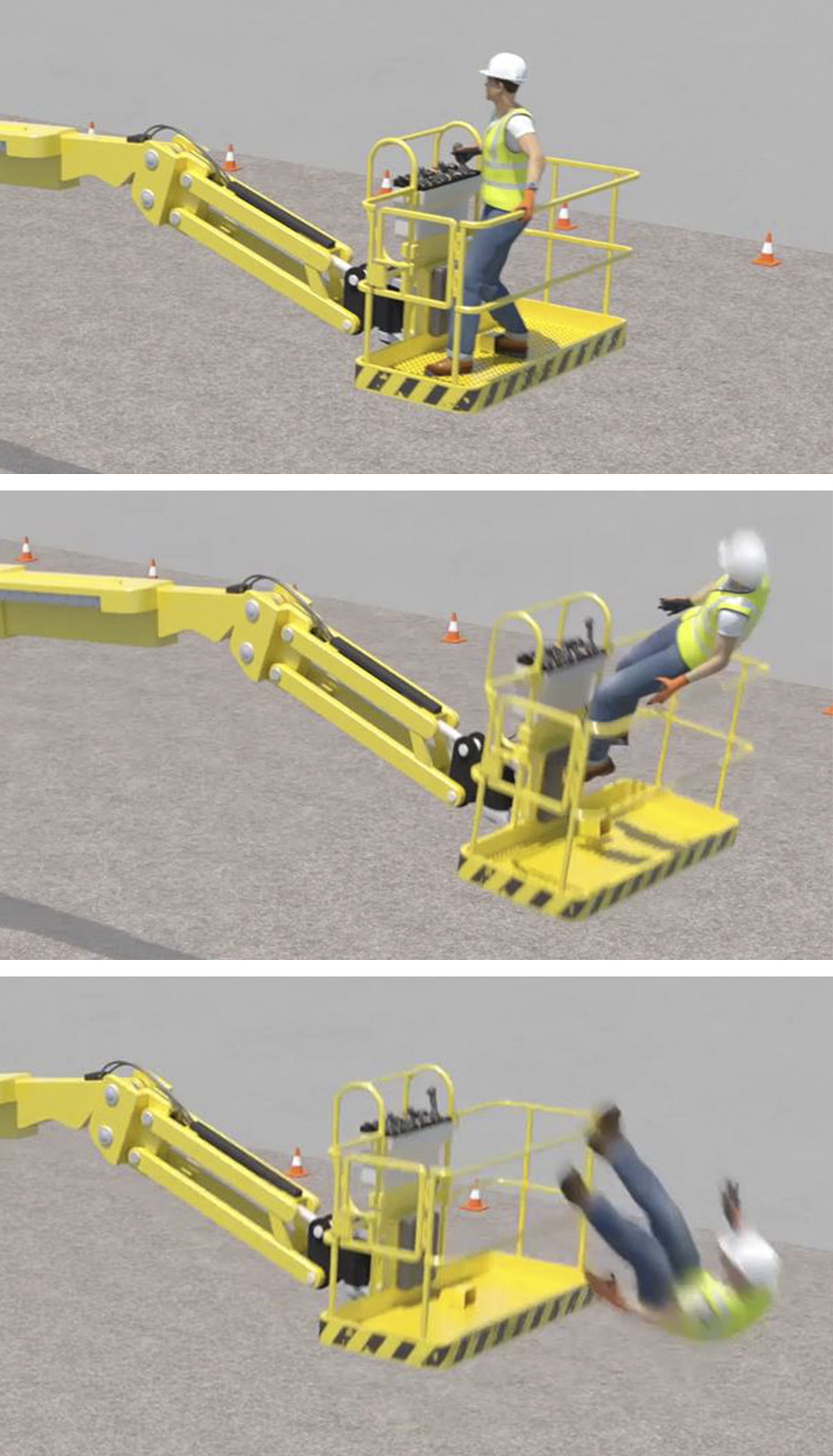
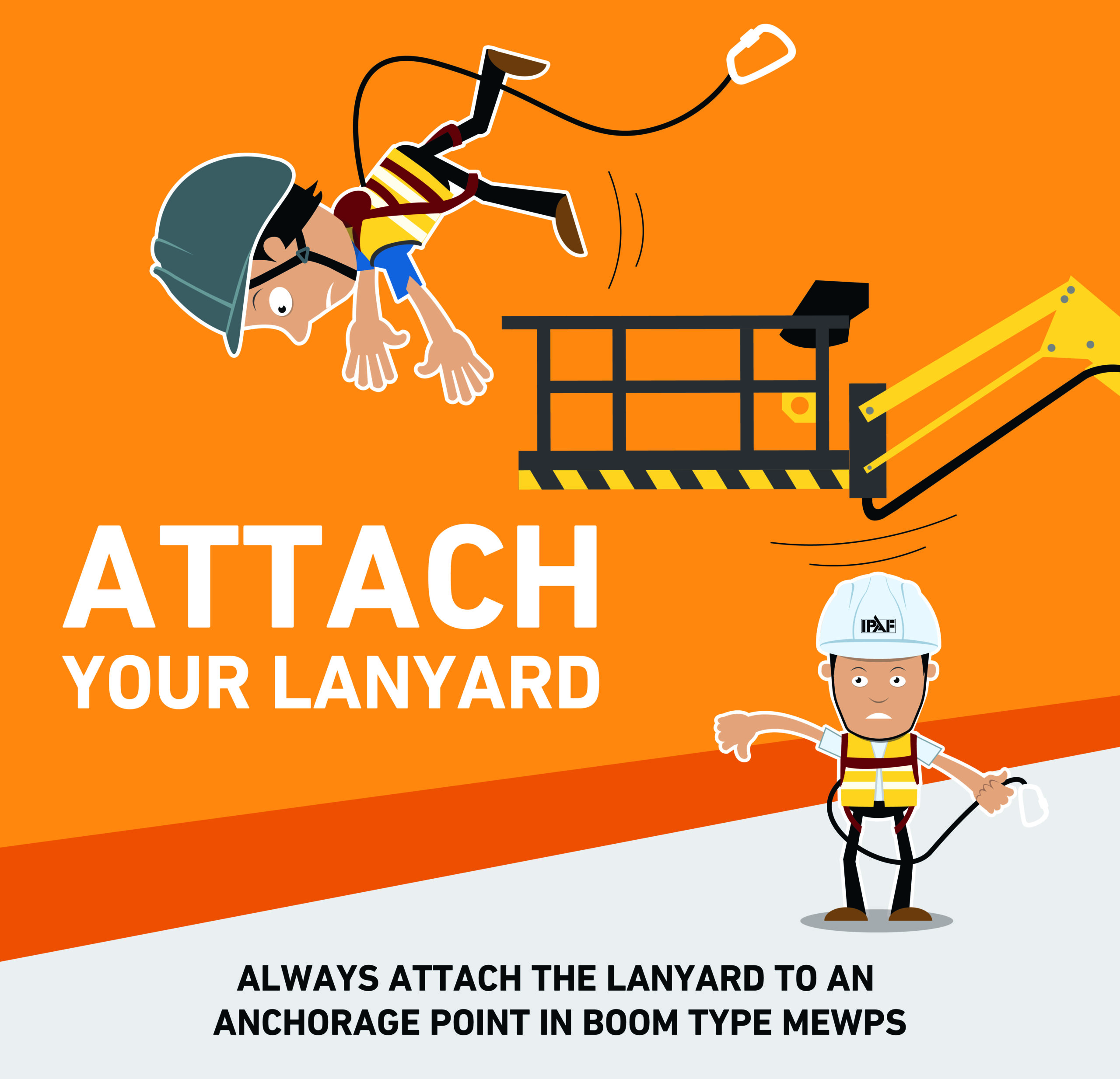
The catapult effect is a serious safety risk when using MEWPs. It happens when a sudden impact or movement passes through the machine and causes a sharp movement at the platform. That movement can throw the operator against the controls or guardrails, or in the worst cases, out of the platform if not wearing the correct harness safety gear.
At JMS Powered Access, this is an important risk to highlight because boom lift hire is a key part of our hire fleet, including articulated, telescopic and rough terrain boom lifts. They are regularly used for tasks that involve outreach and positioning over obstacles, which is why operators need to understand how sudden movement can affect the platform.
What is the catapult effect?
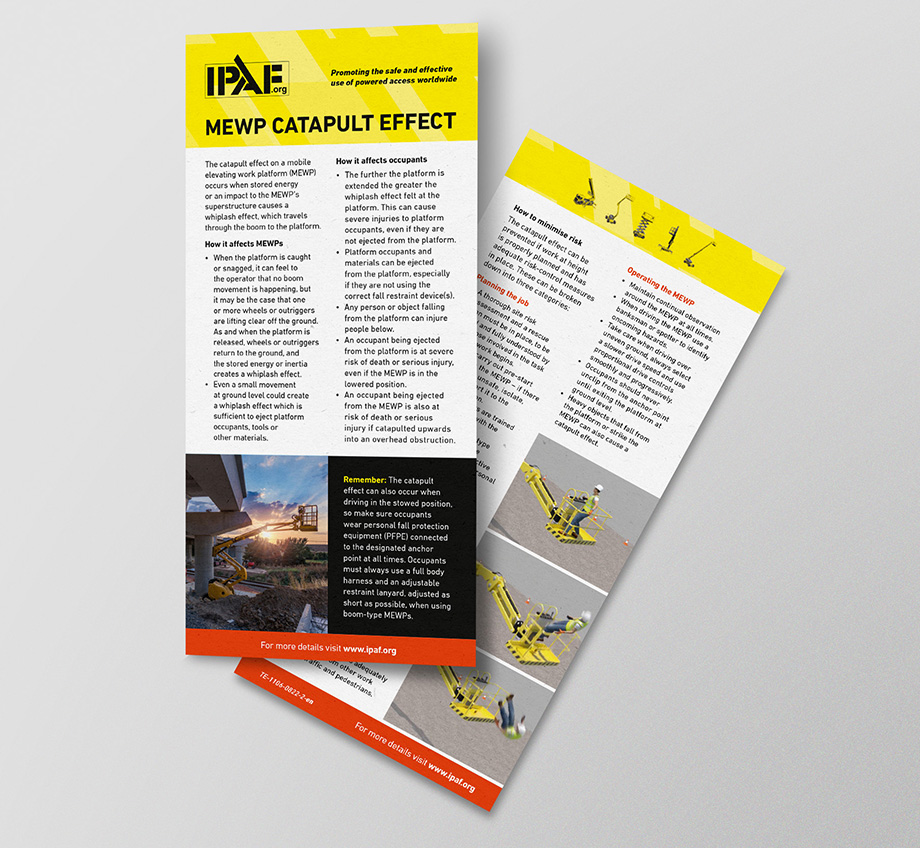
IPAF describes the catapult effect as a whiplash effect caused by stored energy or an impact to the MEWP’s structure, which then travels through the boom to the platform.
In practical terms, a sudden shock to the machine can create a much sharper movement at platform level than operators may expect. If that movement is strong enough, it can throw the operator off balance or increase the risk of injury.
Why is it dangerous?
The main risk is the force of the movement on the platform occupant. A sudden jolt can throw the operator off balance, move them into the guardrails or create a fall risk if the correct restraint is not being worn and attached properly.
This is one of the reasons why fall protection is so important in boom-type MEWPs. Even a short, sharp movement can have serious consequences.
When can it happen?
The catapult effect can happen during normal site movement if the conditions are poor or the machine is driven without enough care. Common examples include:
- Travelling over rough or uneven ground
- Striking potholes, kerbs or debris
- Contacting fixed obstructions
- Sudden changes in level
- Inappropriate travel speed for the conditions
It is important to assess travel routes as carefully as the work area itself.
How can the risk be reduced?
Start with the route. Before moving the machine, check the ground conditions and look for anything that could create a sudden shock through the chassis and boom. Potholes, voids, debris, kerbs, ramps and uneven surfaces all need attention.
Operators should then drive to suit the conditions. That means appropriate speed, good awareness and avoiding sharp or careless movements. Safe operation depends on the route, the surface and the way the machine is being used.
Machine selection also matters. The right boom for the terrain, task and site layout will help reduce unnecessary risk before work even begins. If you need advice on selecting the right boom lift for site conditions, outreach or working height, the JMS team can help you choose from our nationwide boom lift hire range.
Use personal fall protection correctly
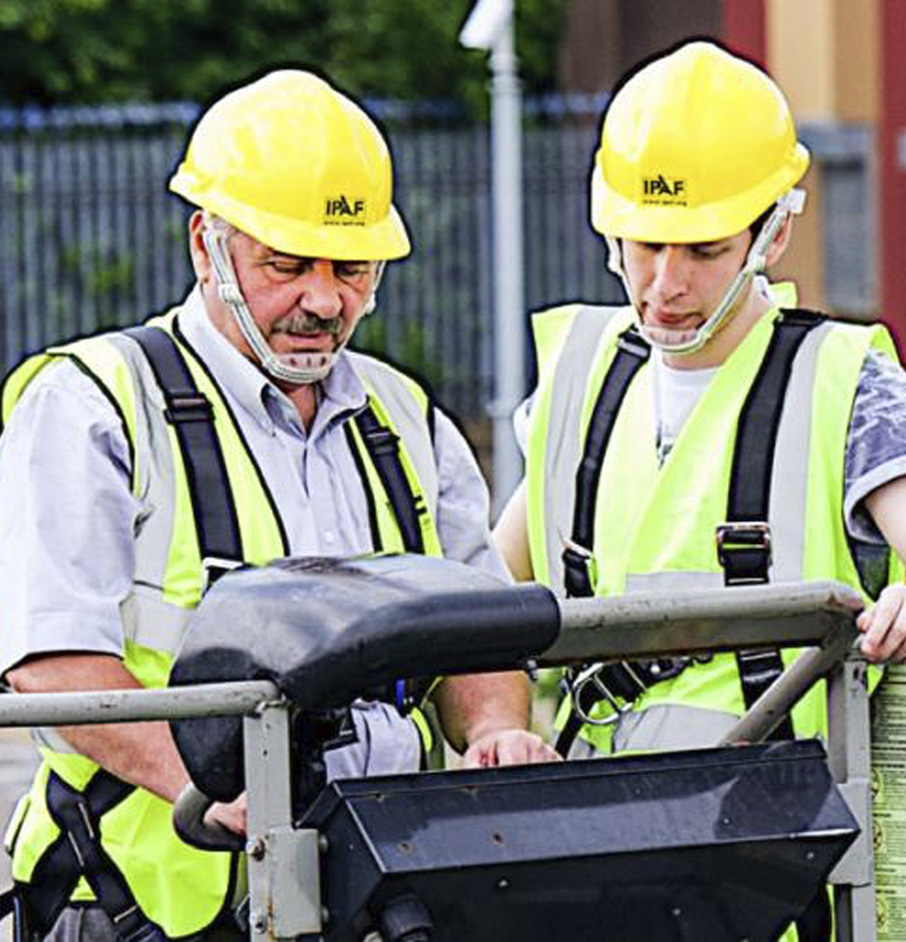
For MEWPs, IPAF’s guidance is clear. Occupants should wear personal fall protection equipment attached to the designated anchor point.
That means using a full body harness with an adjustable restraint lanyard, adjusted as short as possible to help keep the occupant within the platform. This is important throughout operation, including when driving in the stowed position.
Wearing the correct equipment is only part of the process. It also needs to be fitted properly, checked before use and attached to the correct anchor point in the platform. JMS can also supply safety harnesses and PPE, including harnesses, hard hats and gloves, to help support safer working at height.
Training and familiarisation matter
TOperators should be trained for the category of machine they are using and familiarised with the specific model on site. They also need to understand the site conditions, travel routes and any restrictions before moving the MEWP.
For boom lift operators, JMS offers IPAF training that covers the essential knowledge needed to operate powered access equipment safely and efficiently. This includes IPAF Mobile Boom Vertical (3b) training for boom lifts such as articulated, telescopic, rough terrain and electric booms, as well as IPAF Harness Training courses for those using personal fall protection equipment.
Supervisors and managers also have a role. They should make sure the machine is suitable, the route has been assessed and the operator is using the correct fall protection equipment in the right way. JMS also offers IPAF MEWPs for Managers (MM) training course that covers all that managers need to know about using MEWPs on site.
Keep safety front of mind
The catapult effect is a real hazard in MEWP operation. It can happen quickly and the consequences can be serious. Good route assessment, sensible travel speed, the right machine choice and correct use of personal fall protection all help reduce the risk.
At JMS Powered Access, we share IPAF safety guidance to help customers work more safely at height. If you need advice on boom lift hire or IPAF training, our team is here to help.
Call 0345 457 0000 or fill out a contact form for an email or call back.
Download IPAF’s Resources
- MEWP CATAPULT EFFECT
- DO YOU KNOW WHAT THE CATAPULT EFFECT IS?
- FALL PROTECTION IN MEWPS (H1)
- USE PERSONAL FALL PROTECTION EQUIPMENT (PFPE) TOOLBOX TALK