


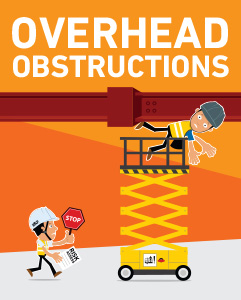

At JMS Powered Access, safety is central to every job involving powered access equipment. One of the most serious hazards when working at height is contact with overhead obstructions, particularly when operating a Mobile Elevating Work Platform (MEWP) in confined or restricted spaces. IPAF guidance makes it clear that entrapment and crushing incidents can happen quickly, often with severe consequences.
Why overhead obstructions are a serious risk
Overhead obstructions can include beams, ceilings, pipes, structural steelwork, signage, lighting, building features, and other fixed or temporary site hazards. When a MEWP is operated too close to these obstructions, there is a risk of crushing, entrapment, or collision. This risk increases when visibility is limited, when the machine is moved too quickly, or when the operator is not fully aware of the surrounding environment.
In many cases, incidents are caused by simple but critical errors such as not identifying overhead obstructions during planning, selecting the wrong control or moving in the wrong direction, operating too quickly or erratically near obstacles, failing to allow enough stopping distance, or sudden boom movement caused by uneven ground, kerbs, ditches, or snagging.
Planning before work begins
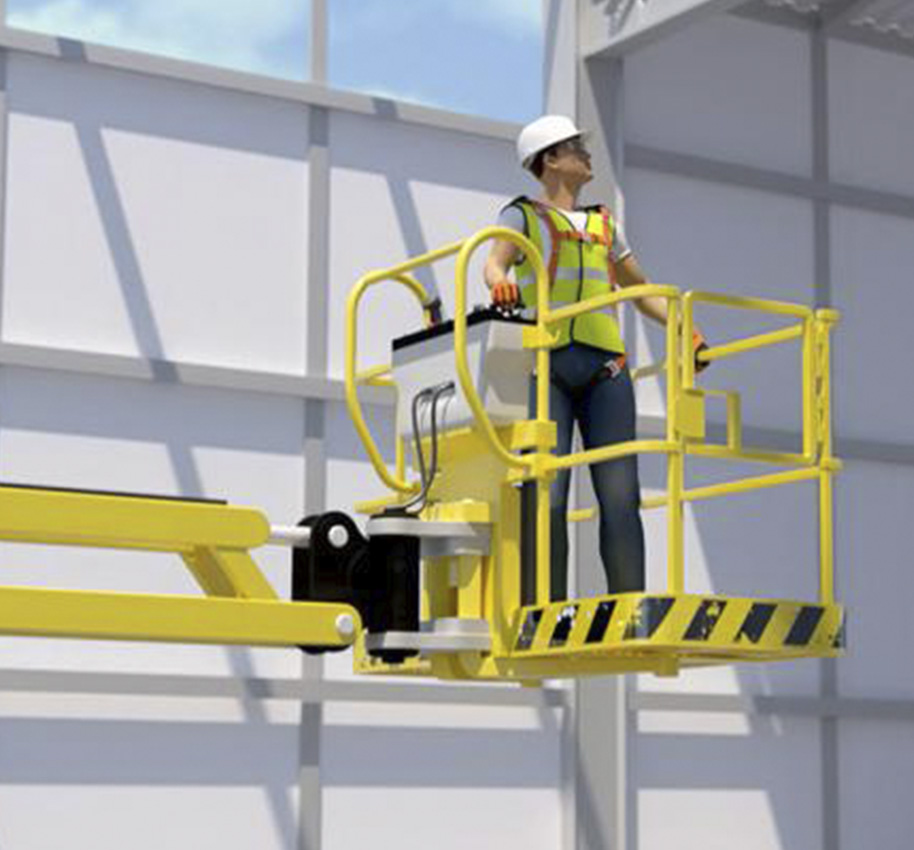
As with all work at height, good planning is essential. A thorough risk assessment should identify any overhead obstructions and determine how the MEWP will be used safely in the work area. Where the risk of entrapment remains foreseeable, secondary guarding should also be considered as part of the control measures, alongside safe site planning, operator familiarisation, and a valid rescue plan.
It is also important to make sure the operator is familiar with the machine and understands the correct sequence of movement. In confined areas, a trained grounds person or banksman can provide valuable supervision and help guide the MEWP safely.
Our hire checklist provides a useful overview on criteria you will need to consider prior to hiring
Safe working practices
To reduce the risk of contact with overhead obstructions, operators should work slowly, deliberately, and with full awareness of their surroundings. The platform should always be positioned to give safe clearance, and the machine should only be moved when the route ahead is clear.
Key precautions include:
- Fit and use secondary guarding where the assessment shows a residual entrapment risk.
- Identify all potential overhead obstructions before starting work.
- Keep a clear view of the direction of travel at all times.
- Use the correct controls and move the machine deliberately.
- Allow enough clearance and stopping distance.
- Use a banksman where visibility is limited or space is restricted.
- Avoid sudden movements, especially on uneven ground or near edges.
Secondary guarding
Secondary guarding is designed to provide an additional layer of protection on boom-type MEWPs. JMS explains that these devices help protect operators by stopping further movement and activating audible and visual warnings when triggered. IPAF also notes that secondary guarding is intended to further reduce entrapment risk and should be used in addition to, not instead of, proper planning, training, and safe operating practice.
This makes secondary guarding especially relevant when working near overhead obstructions, where the risk of crushing or entrapment can develop very quickly. However, it should always be selected to suit the task and site conditions, because it is one part of a wider risk-reduction approach rather than a standalone solution.
Training and awareness
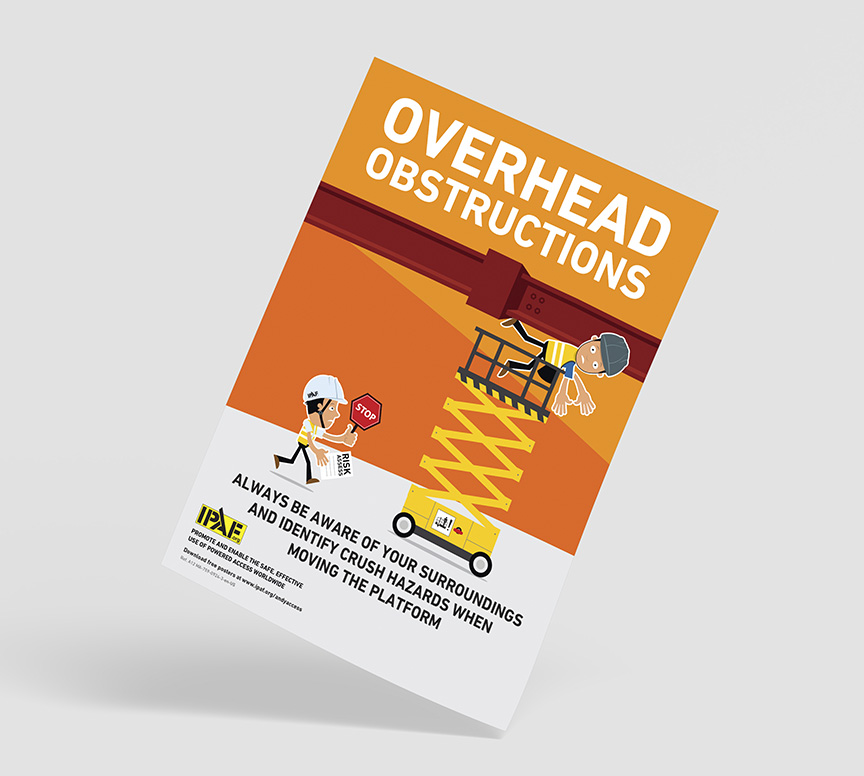
The best protection against overhead obstruction incidents is a well-trained and alert workforce. Operators should be trained on the specific MEWP they are using and familiarised with the site conditions before work begins. Supervisors and managers also have a role to play by making sure the risks are properly assessed, secondary guarding is considered where appropriate, and safe systems of work are followed.
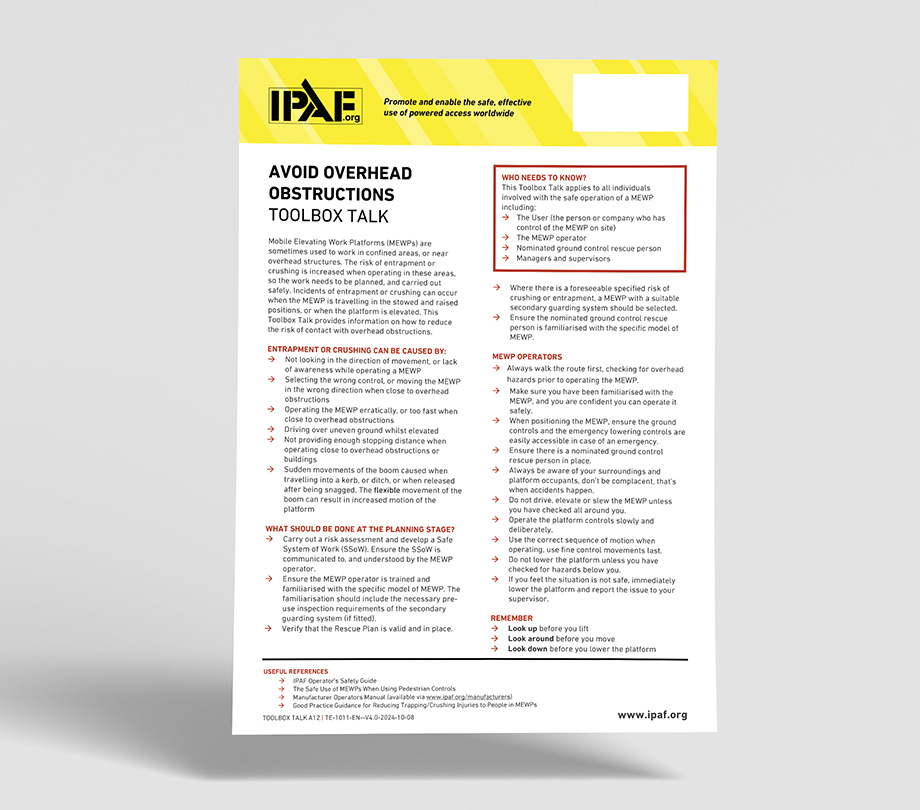
IPAF also provides useful toolbox talks and supporting resources to reinforce this message on site. These can help keep overhead obstruction risks front of mind and support safer day-to-day operations.
At JMS, we remain committed to supporting safe work at height with the right equipment, the right advice, and the right approach to planning. If you need guidance on MEWP safety, site planning, secondary guarding, or training, our team is here to help.