


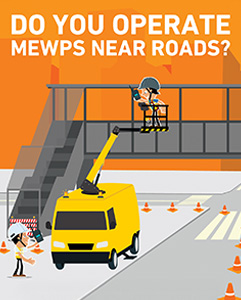

Working with a Mobile Elevating Work Platform on or next to a road introduces additional hazards from passing traffic, pedestrians, restricted space and changing road conditions.
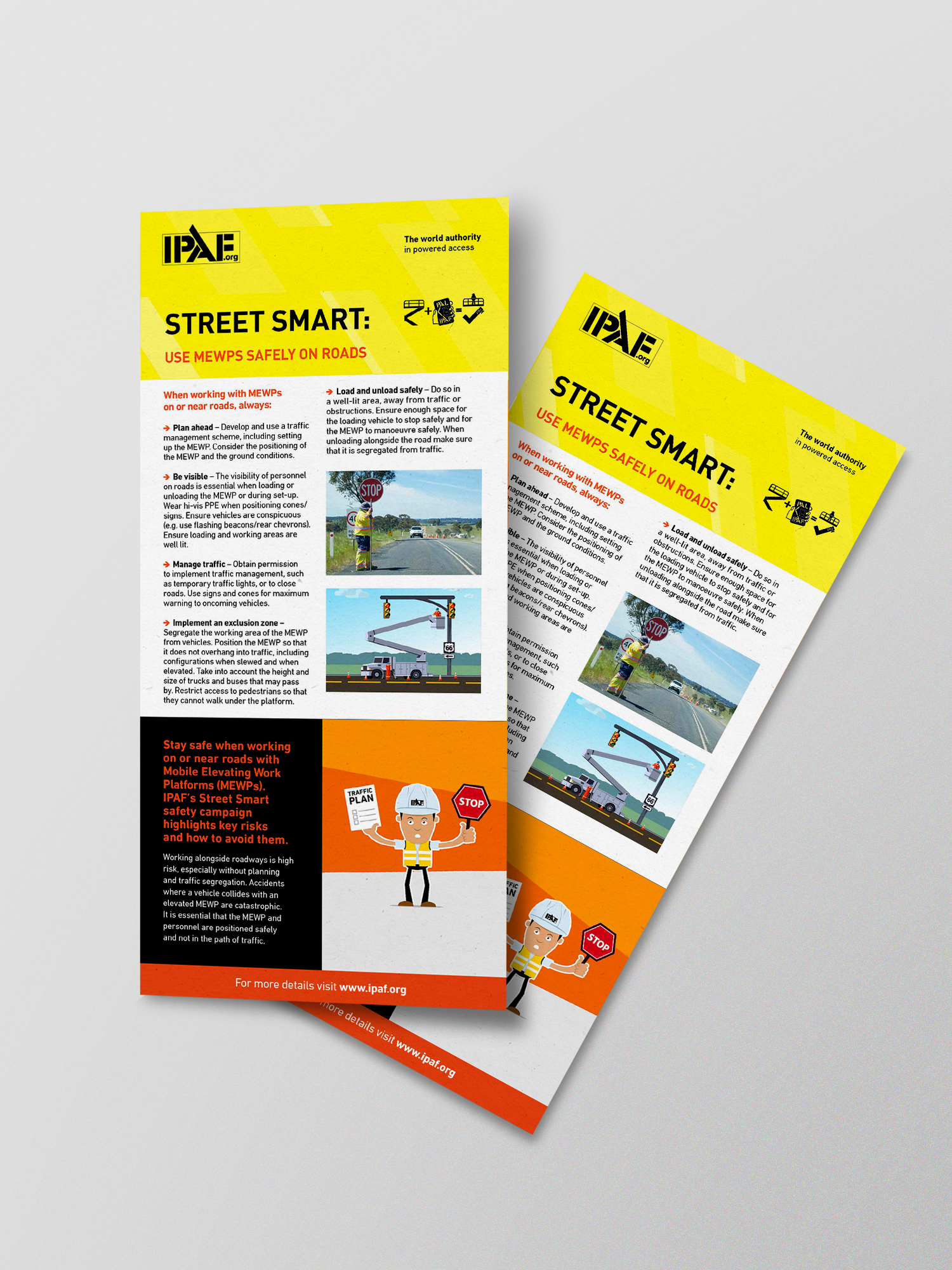
IPAF’s Street Smart campaign highlights the precautions needed to protect operators, workers on the ground and members of the public when powered access equipment is used near live traffic.
At JMS Powered Access, this is particularly relevant to customers using boom lifts, more specifically articulated boom lifts and truck mounted platforms for street lighting, telecoms, CCTV, signage, building maintenance and utility work.
Plan the work and traffic management arrangements
Before the MEWP arrives, assess the full operation, including delivery, unloading, setup, platform movement, repositioning and collection.
The traffic management controls required will depend on the road, location and type of work. These may include:
- Warning signs
- Cones and barriers
- Temporary traffic lights
- Lane restrictions
- Parking suspensions
- A partial or full road closure
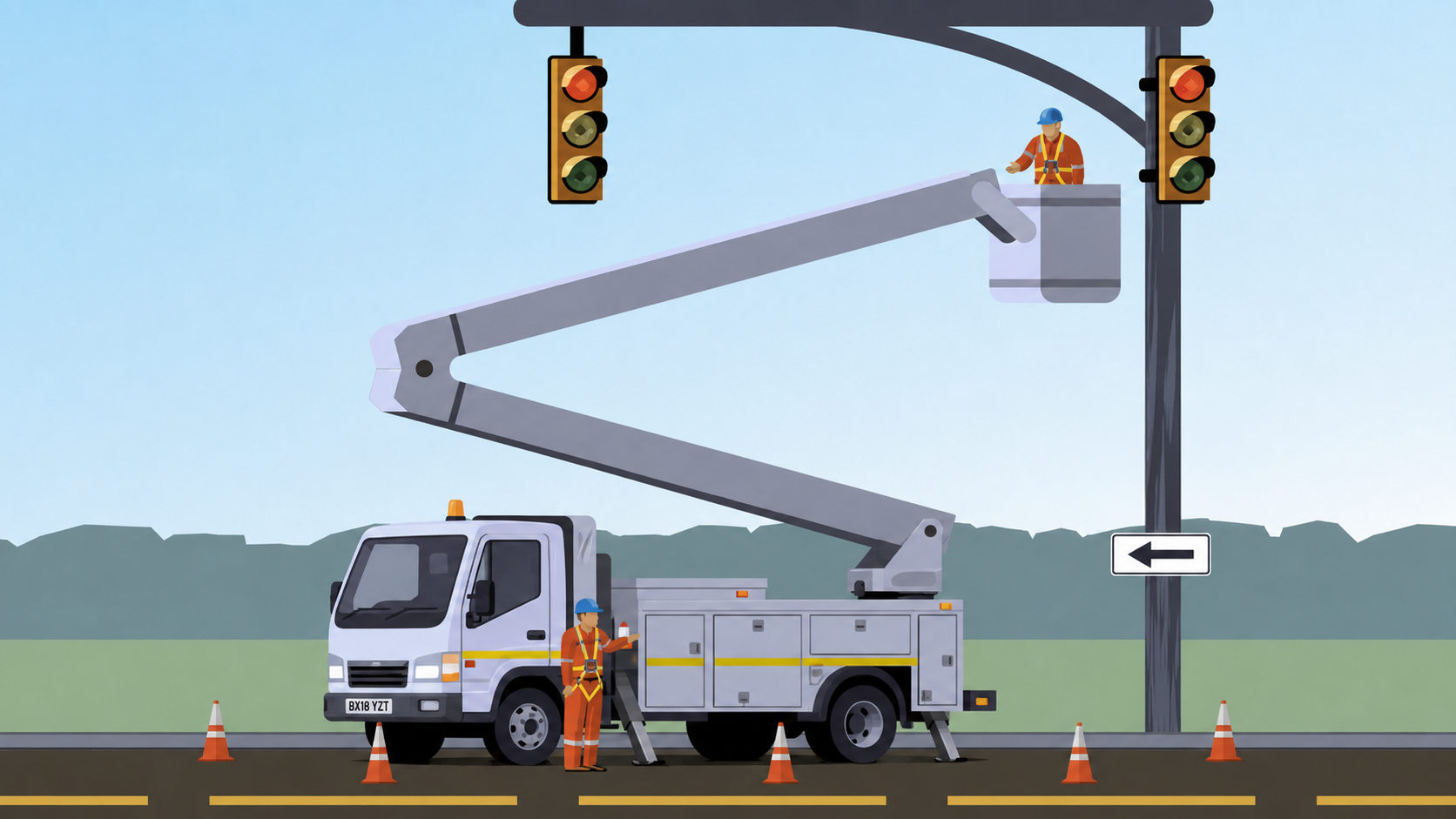
The position and full operating range of the MEWP must be considered as part of the plan. A boom that is clear of traffic when lowered could extend or slew into the path of vehicles once elevated.
Also consider:
- The speed and volume of passing traffic
- The size and height of vehicles using the road
- The space needed to set up and operate safely
- Pedestrian routes and nearby access points
- Ground conditions beneath the MEWP
- Lighting and visibility
- Emergency access and escape routes
Any necessary permissions must be arranged before work begins. This may involve the local highway authority, council, Transport for London or another organisation responsible for the road. When customers hire a MEWP from JMS Powered Access, our team can also support the planning process and help coordinate the required traffic management, permits and suspensions where appropriate.
The final layout should give approaching drivers enough warning and maintain suitable separation between traffic, pedestrians and the work area.
Make the operation visible
Operators and ground staff must be easy for road users to see, particularly while setting up, loading, unloading or working close to live traffic.
Suitable high-visibility clothing should be worn, and the MEWP or delivery vehicle may also require:
- Flashing beacons
- High-visibility markings or rear chevrons
- Suitable work-area lighting
- Additional illumination in darkness or poor visibility
Visibility should be checked from the direction of approaching traffic, rather than only from inside the work area. Trees, parked vehicles, bends and street furniture can all reduce how early drivers see the operation.
Create and maintain a secure exclusion zone
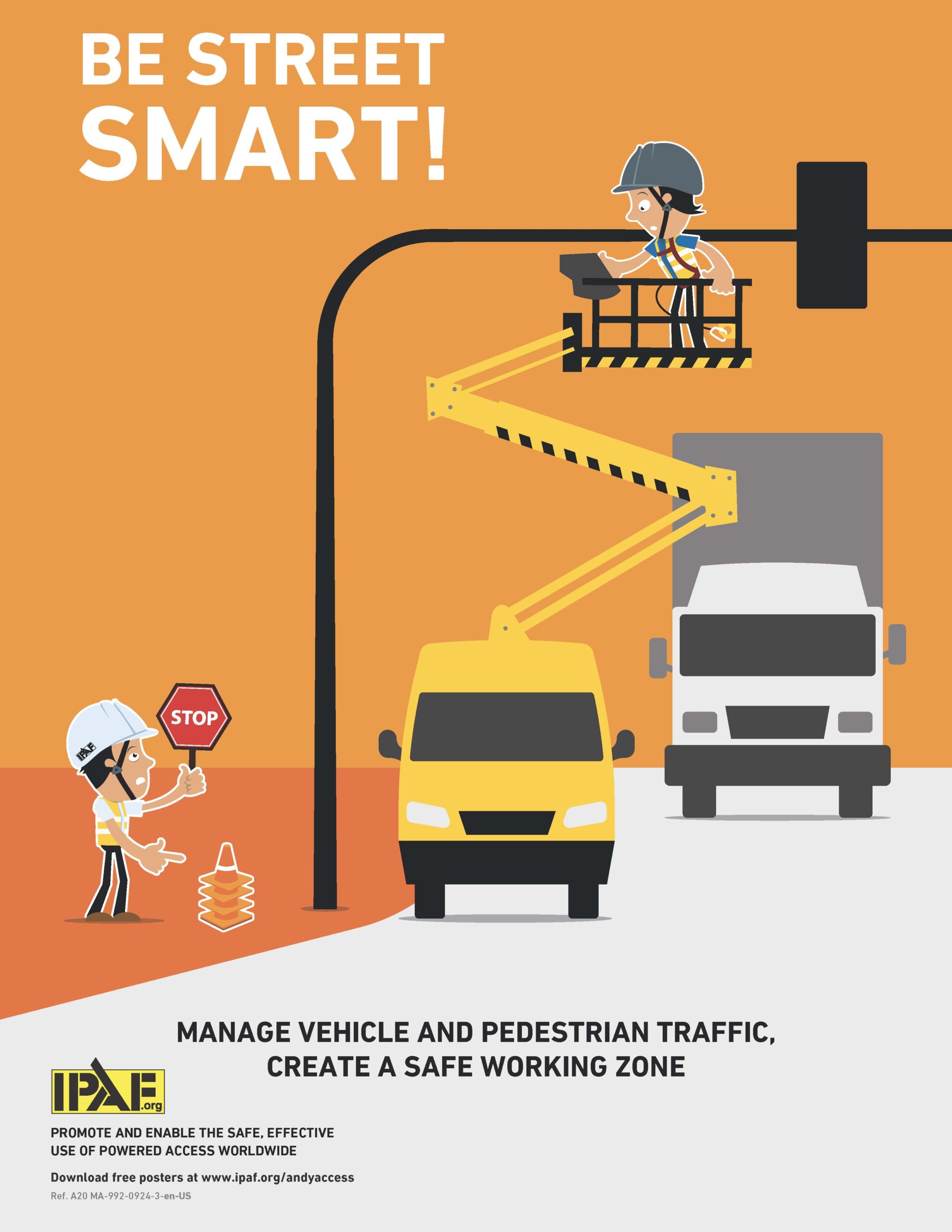
The exclusion zone must protect both the MEWP and the people working around it from passing vehicles and pedestrians.
It should be large enough to contain the MEWP throughout its complete operating range, including when the boom is elevated, rotated or repositioned. The height and width of passing buses, lorries and other large vehicles must also be considered.
Pedestrian routes should be controlled so people cannot enter the setup area or pass beneath the elevated platform. If a pavement or public route is affected, a clearly marked and suitable diversion may be required.
The exclusion zone should remain in place throughout the task. Barriers and controls must be checked if the MEWP is moved or if site conditions change.

Load and Unload Safely
Loading and unloading can expose operators and delivery teams to additional risks before the work at height has even started.
Choose a well-lit location with enough space for the delivery vehicle to stop safely and for the MEWP to manoeuvre without entering live traffic or pedestrian routes.
Before unloading:
- Put the agreed traffic controls in place
- Check that the ground is firm and reasonably level
- Keep people clear of ramps and moving equipment
- Identify kerbs, potholes and changes in level
- Check for overhead obstructions
- Plan a safe route from the unloading point to the work area
Ground staff should not step into live traffic to release restraints, position ramps or guide the equipment.
Select and position the MEWP carefully
The MEWP must be suitable for the working height, outreach, site access and surface conditions.
Boom lifts and truck mounted platforms are often used for roadside work because they can provide access above or beyond obstacles. However, the full boom and platform movement must remain within the protected work area.
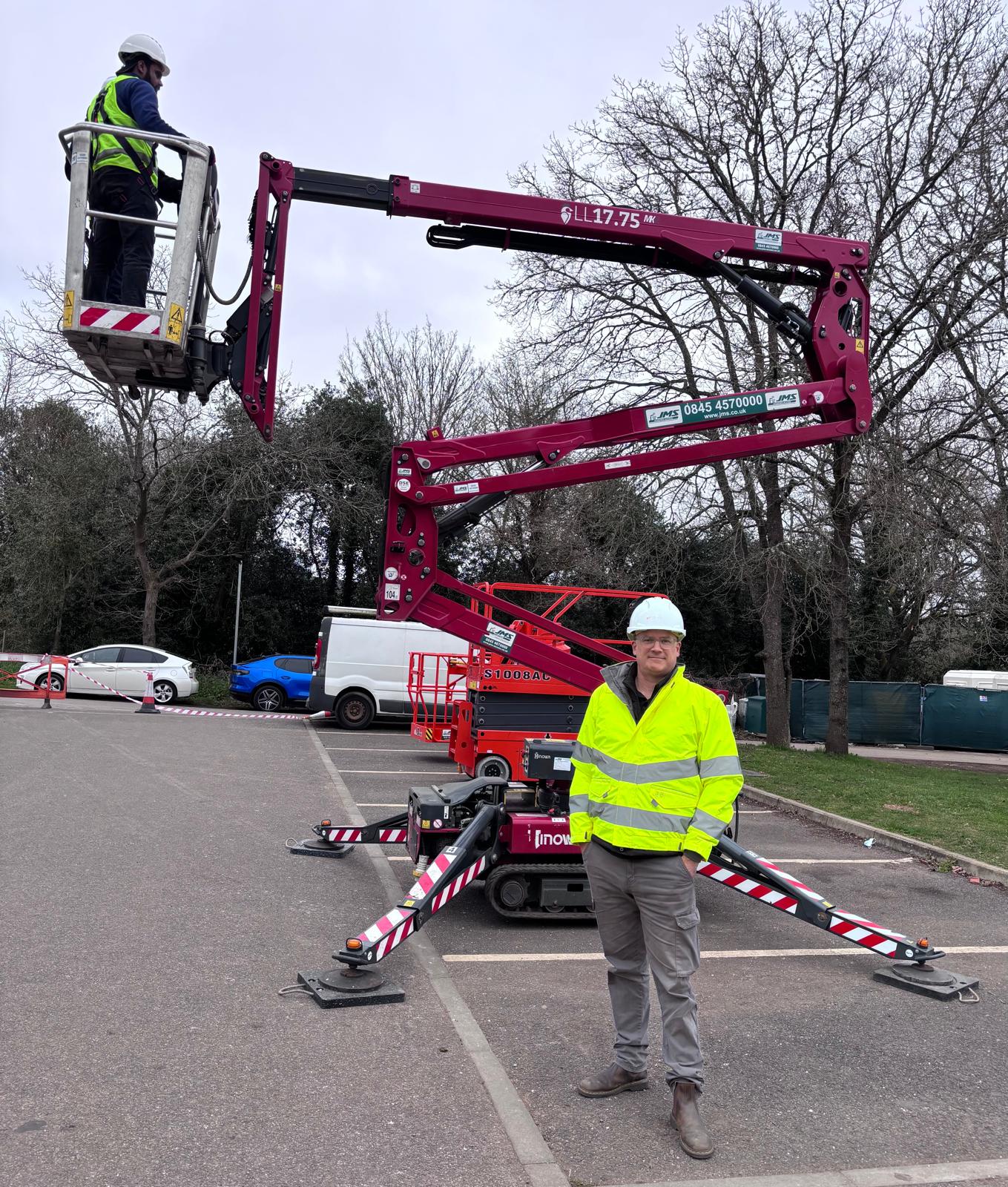
Where stabilisers or outriggers are required, allow enough setup space and confirm the ground can support the loads involved. Spreader Pads may be required to help spread the load of the MEWP evenly. The operator should also check that the MEWP can reach the work area without exposing the platform to live traffic.
If the required position cannot be achieved safely, the machine location or traffic management arrangements must be changed before work continues.
The JMS team can advise on a suitable boom lift or truck mounted platform based on the working height, outreach, site access and traffic conditions.


Training and supervision
MEWP operators should hold the correct IPAF qualification for the equipment they are using and be familiarised with the specific model before work begins.
The operator briefing should cover:
- The agreed traffic management plan
- The limits of the exclusion zone
- The route for travelling and repositioning
- Pedestrian controls
- Site-specific hazards
- Emergency and rescue arrangements
A trained banksman or ground person may also be needed to guide setup and repositioning, monitor blind spots and clearances, and warn the operator if traffic or site conditions change.
Supervisors should check that the planned controls remain suitable throughout the work and stop the task if the exclusion zone, visibility or traffic arrangements are no longer effective.
JMS offers IPAF training for operators, supervisors and managers working with powered access equipment.
For advice about powered access hire, operated hire, traffic management support or IPAF training, contact JMS Powered Access on 0345 457 0000.